Faith can be easy to talk about when life is calm, but its true depth often becomes clearer when we face uncertainty, disappointment, or a difficult decision. A strong faith does not mean we never struggle or have questions. Instead, it means learning to trust God more deeply, follow Him when the path is unclear, and allow that trust to shape the way we live.
So how can we recognize whether our faith is growing stronger? What does genuine, steady faith actually look like in everyday life?
1. You Trust God Even When You Don’t Understand
One of the clearest signs of growing faith is learning to trust God without needing to understand everything first.
I know how difficult this can be. When something matters deeply to me, I naturally want answers. I want to know why something is happening, how it will work out, and when the situation will change. Yet faith often asks me to surrender that demand for certainty.
Scripture gives us a simple picture of what that trust looks like:
“For we walk by faith, not by sight.”
2 Corinthians 5:7 ESV
Reflection: What situation am I trying to understand completely instead of trusting God with it?
Walking by faith does not mean pretending that problems are not real. It means refusing to believe that what I can see is all there is. I can acknowledge the uncertainty while still choosing to trust God’s character.
There may be times when I do not understand His timing. There may be prayers I cannot explain and circumstances that make little sense. A strong faith does not require me to have every answer before I move forward.
Sometimes the faithful step is simply the next one.
That might mean continuing to pray, making a wise decision, waiting patiently, forgiving someone, or refusing to give in to fear. I may not see the entire road, but I can trust God enough to take today’s step.

2. You Keep Praying, Even in Silence
Prayer becomes especially meaningful when we do not immediately receive the answer we hoped for.
It is easy to pray enthusiastically when everything feels hopeful. The harder moments come when we have asked, waited, asked again, and still seem to hear nothing.
I have learned that silence does not have to mean I should stop talking to God.
Paul’s words remind us to maintain that connection:
“Rejoice always, give thanks in all circumstances; for this is God’s will for you in Christ Jesus.”
1 Thessalonians 5:16-18
Reflection: Am I still bringing my heart to God when I cannot see an answer?
Prayer is not a transaction where I say the right words and automatically receive the outcome I want. It is a relationship. I can bring God my disappointment, confusion, gratitude, fear, and hope.
Sometimes my prayer may be long and thoughtful. Other times, it may be only a few honest words.
What matters is that I continue turning toward Him.
When I keep praying during a quiet season, I am practicing trust. I am reminding myself that God’s presence is not dependent on whether I immediately feel something happening.
That kind of persistence can quietly strengthen faith.
3. Your Faith Shows Up in Your Actions
It is possible to know a great deal about faith without allowing it to change the way we live.
I can read Scripture, listen to sermons, and talk about Christianity, yet still avoid the obedience God is placing in front of me.
James challenges that kind of passive belief:
“Do not merely listen to the word, and so deceive yourselves. Do what it says.”
James 1:22
Reflection: Is there something I already know God is asking me to do that I have been avoiding?
Faith becomes visible through our choices.
It may show up when I choose forgiveness instead of resentment. It may look like telling the truth when a lie would be more convenient. It may mean serving someone without expecting recognition or choosing kindness when I am already frustrated.
None of this means Christians become perfect.
I still make mistakes. You and I will have days when our attitudes are not where they should be. But genuine faith creates a willingness to keep growing, correcting our course, and putting God’s truth into practice.
One small act of obedience may not feel significant at the time. Yet those choices shape the direction of our lives.
Faith is not only something we say we have. Over time, it becomes something people can see in how we live.
4. You Find Peace in Uncertainty
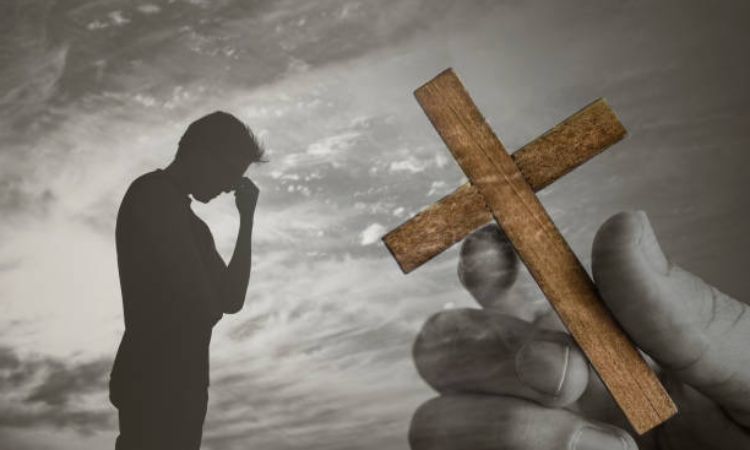
I do not think strong faith means I never feel afraid.
There are situations that can shake any of us. A difficult diagnosis, financial pressure, family problems, unanswered prayers, or an uncertain future can quickly make fear feel overwhelming.
Faith gives us another place to stand.
Jesus reminded His followers that worry cannot add anything to their lives:
“Therefore I tell you, do not worry about your life, what you will eat or drink; or about your body, what you will wear. Is not life more than food, and the body more than clothes? Look at the birds of the air; they do not sow or reap or store away in barns, and yet your heavenly Father feeds them. Are you not much more valuable than they? Can any one of you by worrying add a single hour to your life?”
Matthew 6:25-27
Reflection: What uncertainty do I need to place back into God’s hands instead of carrying it through every moment of my day?
There is a difference between ignoring a problem and refusing to let that problem control my heart.
I can make plans. I can seek wise counsel. I can take responsible action. But eventually, I have to release what is beyond my control.
That is where trust becomes practical.
When uncertainty comes, I can pause and pray instead of immediately spiraling into every possible worst-case scenario. I can remind myself that today’s circumstances do not give me permission to abandon hope.
Sometimes peace comes not because the situation has changed, but because my posture toward it has changed.
5. You’re Honest With God About Doubt
This one matters deeply to me because doubt can make us feel like we are failing at Christianity.
We may think, “If my faith were stronger, I wouldn’t have these questions.”
But pretending to have confidence we do not actually feel does not create deeper faith. God already knows what is happening inside us. We can bring Him the truth.
Even the desire to believe can become a starting point.
Jesus said:
“Blessed are those who have not seen and yet have believed.”
John 20:29
Reflection: What question, fear, or doubt have I been afraid to bring honestly before God?
There is a difference between honestly wrestling with questions and deliberately turning away from God. A season of uncertainty can become an opportunity to seek Him more deeply.
When I am struggling, I do not need to manufacture certainty. I can pray honestly. I can open Scripture. I can ask for wisdom. I can talk with mature believers I trust.
Faith can grow in the middle of questions.
In fact, sometimes the most meaningful prayer is not a confident declaration that I understand everything. It is simply an honest invitation: “God, help me trust You here.”
6. You Return to Scripture for Direction
When I’m unsure about what to do, one of the first places I try to return is God’s Word. I don’t always find an immediate answer to the exact question I’m asking, but Scripture has a way of bringing my thoughts back into perspective.
A strong faith doesn’t mean I always know which direction to take. It means I’m willing to let God’s truth guide me instead of allowing fear, emotions, or circumstances to make every decision for me.
That’s why regular Bible reading matters. Scripture gives us something steady to hold onto when everything around us feels uncertain. Sometimes one verse is enough to slow me down, correct my thinking, or remind me of what I already know but have temporarily forgotten.
“Your word is a lamp for my feet, a light on my path.”
Psalm 119:105
Reflection: Where do you need God’s Word to give you clarity or direction right now?
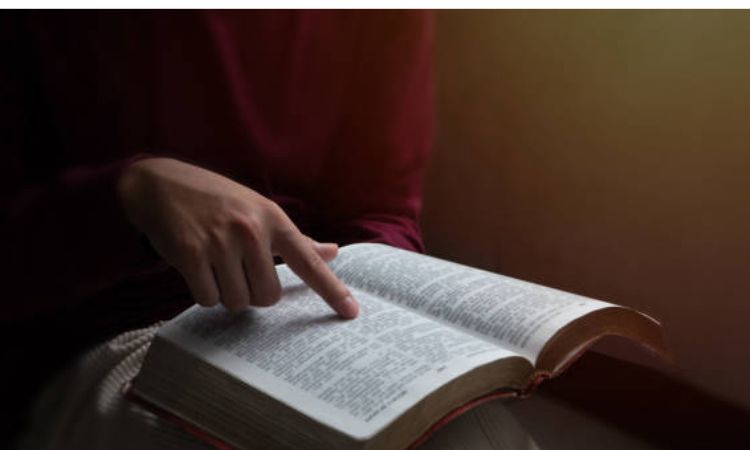
For me, reading the Bible is most meaningful when I stop treating it like something I simply need to finish. I want to pause, think about what I’m reading, and ask how it applies to the way I’m actually living. A few verses understood and practiced can have more impact than rushing through several chapters without paying attention.
If you’re trying to strengthen your faith, start small. Read a passage, write down what stands out, and carry that thought with you throughout the day. Let Scripture become part of how you think, respond, and make decisions.
7. You Choose Gratitude, Even in Hard Seasons
Gratitude can feel natural when life is going well. It becomes much more meaningful when circumstances are difficult.
I’ve learned that being thankful doesn’t require me to pretend everything is fine. I can acknowledge that something hurts, admit that I’m disappointed, and still look for reasons to thank God. Those things can exist at the same time.
Paul gives us a simple reminder:
“Rejoice always, give thanks in all circumstances; for this is God’s will for you in Christ Jesus.”
1 Thessalonians 5:16-18
Reflection: What is one thing you can genuinely thank God for today, even if this season is difficult?
Choosing gratitude changes where I place my attention. Instead of allowing one unanswered question to consume my thoughts, I can remember the blessings, people, opportunities, and moments of grace already present in my life.
That doesn’t erase hardship. It simply keeps hardship from becoming the only thing I see.
Sometimes my gratitude is as simple as thanking God for another morning, a conversation with someone I love, a quiet moment, or the strength to make it through another difficult day. Small expressions of thankfulness can help turn my heart back toward God when worry begins taking over.
8. You Forgive — Even When It’s Difficult
Forgiveness is one of the clearest places where faith becomes personal.
It’s easy to talk about forgiveness when nobody has seriously hurt us. It’s much harder when there is real disappointment, betrayal, anger, or pain involved. I don’t think forgiveness means pretending the hurt never happened or acting as though harmful behavior was acceptable. It means choosing not to let resentment control my heart.
Jesus connected prayer with forgiveness in a direct way:
“Is anyone among you suffering? Then he must pray. Is anyone cheerful? He is to sing praises.”
James 5:13
And the teaching from Mark 11 reminds us that our relationship with God affects how we approach the people who have hurt us.
Forgiveness can take time. Sometimes I have to bring the same wound to God more than once because the feelings haven’t disappeared. That doesn’t necessarily mean I’m failing. It can mean I’m still learning to surrender something painful.
A strong faith doesn’t mean I never feel anger. It means I refuse to allow anger, bitterness, or revenge to become the foundation of my life.
I can ask God for the grace to release what I cannot change and to respond with wisdom rather than retaliation.
Reflection: Is there someone or something you need to place back in God’s hands instead of carrying it alone?
9. Your Faith Grows Through Community
Faith was never meant to be lived entirely alone.
There are seasons when I want to withdraw, especially when I’m discouraged or uncertain. But isolation can make difficult thoughts feel even heavier. Sometimes what I need most is another believer who will listen, pray with me, remind me of God’s faithfulness, and help me keep going.
Paul wrote:
“Therefore encourage one another and build one another up, just as in fact you are doing.”
1 Thessalonians 5:11
Reflection: Who is someone whose faith encourages you, and how could you encourage them in return?
I love the picture this gives us. We don’t simply gather with other Christians to exchange information. We strengthen one another.
There may be days when your faith feels strong and someone else needs encouragement. On another day, you may be the one struggling to believe, and another person’s steady trust helps you keep moving forward.
That’s one reason church, Bible studies, small groups, friendships, and honest conversations with mature believers can matter so much. We need people who will celebrate with us, challenge us when necessary, pray for us, and remind us that one difficult season does not define our entire walk with God.
A healthy faith community doesn’t require perfection. It creates room for growth, honesty, prayer, service, and encouragement.

10. You See Growth Over Time, Not Perfection
Perhaps one of the most encouraging signs of strong faith is that you can look back and see that God has been changing you.
I used to think spiritual maturity meant reaching a place where doubt disappeared, mistakes stopped happening, and every circumstance was handled perfectly. I’m learning to see it differently.
Growth is often much quieter than that.
Maybe I’m more patient than I used to be. Maybe I recover from disappointment faster. Perhaps I pray before reacting, forgive more readily, or recognize when my own plans need to be surrendered. These changes may seem small, but they matter.
Paul described the believer’s transformation this way:
“and have put on the new self, which is being renewed to a true knowledge according to the image of the One who created it”
Colossians 3:10
Reflection: When you compare where you are today with where you were a year ago, where can you see evidence of growth?
I don’t want to measure my faith only by how I feel today. Feelings change. Circumstances change. Some days are full of confidence, while others are filled with questions.
What matters is the direction of my life.
Am I continuing to seek God? Am I returning to Scripture? Am I praying? Am I learning to trust Him? Am I becoming more willing to forgive, serve, love, and obey?
Those questions help me see faith as a journey rather than a performance.
A strong faith isn’t necessarily loud or impressive. Sometimes it looks like quietly getting back up, opening the Bible again, whispering another prayer, choosing gratitude, forgiving someone, or taking the next step when the entire path isn’t visible.
And friend, if you can’t see dramatic growth right now, don’t assume nothing is happening. Keep walking. Keep seeking God. Keep making those small, faithful choices.