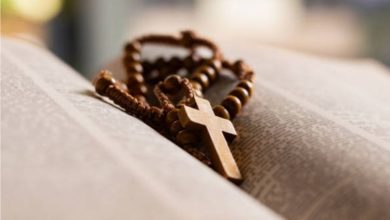
Hard seasons have a way of shaking everything we thought was secure. A strained relationship, unexpected bills, a lost job, a difficult diagnosis, or a situation completely outside our control can leave us wondering what to do next. When the answers don’t come easily and the road ahead feels uncertain, faith gives us somewhere to turn. Trusting God in hard times doesn’t mean we understand every circumstance—it means we choose to believe that He is still with us, still faithful, and still worthy of our confidence.
When life feels overwhelming, hope can seem distant and faith can feel harder to hold onto. Yet those are often the moments when drawing closer to God matters most. We may not be able to see how everything will work out, but we can take the next step knowing we don’t have to walk through the struggle alone.
The Difference Between Hope and Faith (and Why You Need Both)
When life gets hard, I’ve noticed how easily hope and faith can start to feel like the same thing. We talk about having faith when we cannot see what God is doing, and we talk about holding onto hope when the future feels uncertain. Both are essential, but they are not quite identical.
For me, the simplest distinction is this: faith teaches me to trust God, while hope helps me confidently look toward what He has promised. Faith anchors my heart in who God is. Hope helps me keep moving when I cannot yet see how things will unfold.
And when you and I are walking through a crisis, we need both.

Defining Hope in a Spiritual Context
Biblical hope is much stronger than saying, “I hope things get better.” In everyday conversation, hope can sound uncertain, almost like a wish. Christian hope is different. It rests on God and His promises, even when the outcome is still unseen.
Paul explains:
“For in this hope we were saved. Now hope that is seen is not hope. For who hopes for what he sees?” — Romans 8:24
Reflection: What are you hoping for right now that you cannot yet see?
That verse reminds me that waiting is part of hope. If I could already see the answer, I would not need to hope for it. There are seasons when God asks me to keep trusting while the situation remains unresolved.
That kind of waiting can be uncomfortable. I may want an immediate answer, a clear explanation, or some reassurance about what comes next. But biblical hope gives me permission to admit that I do not know the future while still believing God is faithful.
Paul also connects hope with patience:
“Rejoice in hope, be patient in tribulation, be constant in prayer.” — Romans 12:12
Reflection: How could you practice patient hope instead of allowing uncertainty to control your thoughts?
I love how practical that is. Hope is not simply something I feel. It affects how I respond when life becomes difficult. I can continue praying. I can remain patient. I can choose not to let today’s circumstances convince me that tomorrow has no reason for hope.
Defining Faith and Trust
Faith goes deeper than believing that a particular outcome will happen. At its heart, faith is about trusting God Himself.
Hebrews gives us this foundational description:
“Now faith is the assurance of things hoped for, the conviction of things not seen.” — Hebrews 11:1
Reflection: What unseen reality are you being asked to trust God with today?
When I think about faith this way, I realize that I do not have to understand everything before I can trust God. Faith does not require me to have the entire plan laid out in front of me.
It means I can say, “Lord, I don’t understand this, but I trust You.”
That trust matters because faith is not merely confidence in an idea. It draws us toward a Person.
Scripture says:
“And without faith it is impossible to please him, for whoever would draw near to God must believe that he exists and that he rewards those who seek him.” — Hebrews 11:6
Reflection: Are you placing your confidence primarily in an outcome, or are you learning to trust God Himself?
That distinction has helped me during uncertain seasons. Sometimes I desperately want God to change a circumstance. But faith reminds me that my relationship with Him cannot depend entirely on whether I receive the answer I want.
I can trust Him when I understand.
I can trust Him when I am waiting.
And, by His grace, I can continue trusting Him when I don’t understand at all.
Paul captures this posture beautifully:
“We know that while we are at home in the body we are away from the Lord, for we walk by faith, not by sight.” — 2 Corinthians 5:6-7
Reflection: Where are you being tempted to let what you see become more important than what you trust God to be doing?
Walking by faith does not mean ignoring reality. Difficult circumstances are real. Pain is real. Uncertainty is real. But what I can see is not the whole story.
Faith allows me to keep walking when I cannot see the entire road.
How Hope and Faith Work Together in Crisis
This is where I think the difference becomes especially meaningful.
When a crisis comes, faith helps me trust God in the present, while hope helps me look toward what He has promised in the future.
They work together.
Faith says, “God is trustworthy.”
Hope says, “Because He is trustworthy, I can wait for what He has promised.”
Peter places both ideas directly together:
“So that your faith and hope are in God.” — 1 Peter 1:21
Reflection: What would change if you placed both your present trust and your future expectations in God?
Think about what happens when you are waiting for something you desperately want resolved. Maybe you are facing financial pressure, a strained relationship, an uncertain diagnosis, a difficult decision, or simply a season where nothing seems clear.
Hope gives you something to look toward.
Faith gives you Someone to hold onto.
That combination can carry you through moments when answers are slow to come.
Hebrews shows just how closely these two ideas can be connected:
“Now faith is the assurance of things hoped for, the conviction of things not seen.” — Hebrews 11:1
Reflection: What promise of God do you need to keep before your heart while you wait?
For me, this is one of the most comforting parts of the Christian life. I don’t need to see everything before I can take the next step. I don’t need to know exactly how the story ends before I can trust the One writing it.
Faith keeps my heart anchored in God.
Hope keeps my eyes lifted toward what is still ahead.
And when a crisis makes the future look frightening, I can practice both: trust God today and continue hoping in Him for tomorrow.
That does not make difficult circumstances disappear. But it changes how I walk through them. Instead of demanding that I understand everything, I can choose to trust. Instead of assuming the present struggle is the end of the story, I can keep hoping.
Friend, if you are in a difficult season right now, you don’t have to manufacture perfect confidence. Start where you are. Bring your fears to God. Keep praying. Keep trusting His character. Keep looking toward His promises.
10 Practical Ways to Find Hope in Difficult Times
1. Acknowledge Your Pain Instead of Suppressing It
One of the first things I have had to learn is that faith does not require me to pretend I am not hurting. Sometimes I think I should immediately move past sadness, fear, disappointment, or confusion because I trust God. But bringing those emotions honestly before Him is not a failure of faith.
There are moments when the most truthful prayer I can offer is simply, “God, this hurts. I don’t understand it, and I need You.”
The Psalms repeatedly show us that bringing difficult emotions into God’s presence is part of a genuine relationship with Him. I don’t have to hide my pain before I approach Him.
“Be still, and know that I am God. I will be exalted among the nations, I will be exalted in the earth!” — Psalm 46:10
Reflection: What pain have I been trying to hide instead of honestly bringing it before God?
Acknowledging what hurts does not mean giving fear control. It means recognizing reality without allowing it to become my entire identity. Once I admit where I am, I can begin asking God to meet me there.
Sometimes healing begins with simply telling the truth about what we are experiencing.
2. Return to Prayer or Meditation Daily
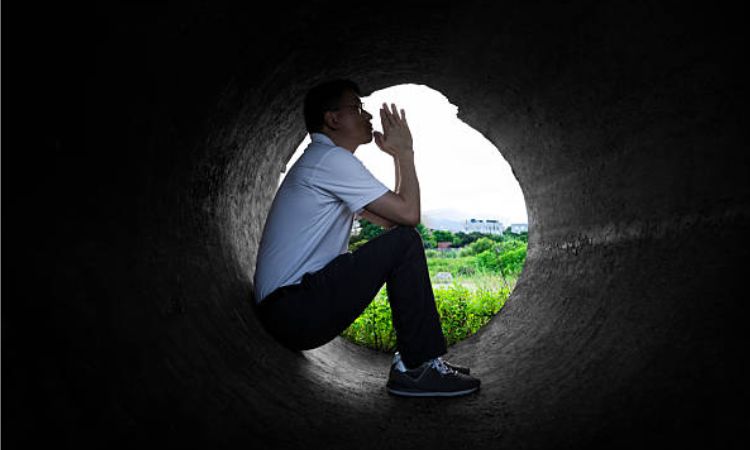
When life feels uncertain, I naturally want answers. I want to know what will happen, when the situation will change, and whether everything will eventually work out. But I have learned that prayer does not always give me immediate explanations. Often, it gives me somewhere to place the questions.
I can bring God my worries, decisions, disappointments, and fears instead of carrying them alone. Even a short prayer can redirect my attention when my thoughts begin spiraling.
Scripture gives us a practical invitation:
“Rejoice in hope, be patient in tribulation, be constant in prayer.” — Romans 12:12
Reflection: What situation do I need to bring back to God today instead of carrying it by myself?
Being consistent in prayer does not mean every prayer has to be long. Some days I may have plenty to say. Other days, I may only have enough strength for a few honest sentences. Either way, returning to God matters.
I can pray while driving, walking, waiting for an appointment, sitting quietly in the morning, or lying awake at night. The important thing is not creating a perfect routine. It is developing the habit of turning toward God rather than away from Him when life becomes difficult.
3. Lean on Scripture for Perspective
When I am overwhelmed, my circumstances can become louder than everything else. A problem that may eventually pass can feel permanent because it is all I can see in that moment.
That is why Scripture has become such an important source of perspective for me. God’s Word reminds me of truths that remain steady when my emotions and circumstances keep changing.
Paul writes:
“So faith comes from hearing, and hearing through the word of Christ.” — Romans 10:17
Reflection: What truth from Scripture do I need to hear again when my circumstances are making me afraid?
Reading the Bible during a difficult season is not about searching for a verse that promises exactly the outcome I want. Instead, I can allow Scripture to remind me who God is, what He has promised, and where I can place my confidence.
When my thoughts become confused, I can return to familiar passages. When I need encouragement, I can read slowly rather than rushing through a chapter. I can underline a sentence, write it in a journal, or return to it throughout the day.
Over time, Scripture helps shift my attention from everything I cannot control toward the God I can trust.
4. Surround Yourself With a Supportive Community
Isolation can make hardship feel much heavier. When I withdraw because I am tired, embarrassed, discouraged, or simply don’t know what to say, I can easily convince myself that nobody understands.
But we were not meant to walk through every difficult season alone.
Sometimes support looks like a close friend who listens without trying to fix everything. Sometimes it is a family member, pastor, church group, or another believer who simply sits beside us and prays.
The Bible encourages this kind of mutual support:
“Therefore encourage one another and build one another up, just as you are doing.” — 1 Thessalonians 5:11
Reflection: Who is someone I can honestly reach out to when I need encouragement?
I do not have to tell everyone everything. A few trustworthy people can make a tremendous difference. And receiving support is not weakness. There may come a time when I am the person who needs encouragement, and another season when I am able to offer it to someone else.
Faith becomes easier to carry when we are willing to carry one another’s burdens through prayer, presence, kindness, and practical help.
5. Practice Gratitude Even in Small Ways
Gratitude can feel difficult when life is painful. I know there are seasons when being thankful seems almost impossible because my mind keeps returning to everything that has gone wrong.
But gratitude does not require me to deny the difficult things. I can acknowledge what hurts while still noticing what is good.
Maybe today I am thankful for one person who checked on me. Maybe it is a quiet morning, a meal, a conversation, a place to sleep, or simply the strength to get through another day.
Paul connects prayer with thanksgiving:
“Do not be anxious about anything, but in everything by prayer and supplication with thanksgiving let your requests be made known to God. And the peace of God, which surpasses all understanding, will guard your hearts and your minds in Christ Jesus. Finally, brothers, whatever is true, whatever is honorable, whatever is just, whatever is pure, whatever is lovely, whatever is commendable, if there is any excellence, if there is anything worthy of praise, think about these things.” — Philippians 4:6-8
Reflection: What is one small thing I can genuinely thank God for today, even in the middle of this difficult season?
I have found that gratitude changes what I notice. It does not erase the problem, but it keeps the problem from becoming the only thing I see.
Some days, my gratitude may be abundant. Other days, it may be very small. That’s okay. Hope does not always begin with feeling joyful. Sometimes it begins with recognizing one good thing and thanking God for it.
6. Reframe Hardship as Part of a Larger Story
When life hurts, it is easy for me to see only what is happening right now. A disappointment can feel like the whole story. A difficult diagnosis, financial pressure, broken relationship, unanswered prayer, or uncertain future can consume so much of my attention that I forget there is more to my life than this one painful chapter.
That is why I have learned to step back and ask a different question: What might God be teaching me through this season? That does not mean pretending the situation is good or denying how much it hurts. It means refusing to believe that my present circumstances are the final word.
Scripture reminds us that suffering has a perspective that reaches beyond the present moment:
“For I consider that the sufferings of this present time are not worth comparing with the glory that is to be revealed to us.” — Romans 8:18
Reflection: What would change in the way I face this hardship if I remembered that this moment is not the whole story?
Hard seasons can deepen endurance, expose what I truly depend on, and teach me to recognize God’s presence in ways I might never have noticed otherwise. I may not understand every reason behind what I am facing, but I can choose to keep moving forward with God rather than allowing pain to define my entire outlook.

7. Limit Negative Input That Feeds Fear
When I am already struggling, I have to be careful about what I continually allow into my mind. Constantly reading frightening news, comparing my life with someone else’s highlight reel, replaying negative conversations, or isolating myself can make an already difficult situation feel even heavier.
This does not mean ignoring reality. It means creating room for truth.
When my thoughts become overwhelmed by fear, I can deliberately redirect my attention toward what is trustworthy. Scripture encourages us to think carefully about what we allow to occupy our minds:
“Do not be anxious about anything, but in everything by prayer and supplication with thanksgiving let your requests be made known to God. And the peace of God, which surpasses all understanding, will guard your hearts and your minds in Christ Jesus. Finally, brothers, whatever is true, whatever is honorable, whatever is just, whatever is pure, whatever is lovely, whatever is commendable, if there is any excellence, if there is anything worthy of praise, think about these things.” — Philippians 4:6-8
Reflection: What negative influence do I need to turn down so I can make more room for God’s truth and peace?
Sometimes the most practical thing I can do is put my phone down, step away from the news, stop comparing myself with others, and spend a few quiet minutes praying. I cannot always control what happens around me, but I can become more intentional about what I repeatedly feed my mind.
8. Serve Others, Even While You Are Struggling
Hardship can make life feel very small. When I am hurting, my attention naturally turns inward because I am trying to survive the situation in front of me. But one of the surprising ways hope can return is by looking beyond myself.
That might mean sending an encouraging message, praying for a friend, helping someone who needs support, listening to another person’s story, or simply showing kindness when I do not feel particularly strong myself.
The Bible reminds us that encouragement is something we are meant to give one another:
“Therefore encourage one another and build one another up, just as you are doing.” — 1 Thessalonians 5:11
Reflection: Who could use a little encouragement from me today, even if I am walking through a difficult season myself?
I have found that serving others does not require having everything figured out. Sometimes I can encourage someone while I am still waiting for encouragement myself. In those moments, I am reminded that faith is not only something I receive; it is something I can live out through ordinary acts of love.
And I do not have to pretend that I am fine in order to help someone else. Honest compassion can come from a wounded place. Sometimes the person who understands another person’s pain best is someone who has experienced pain too.
9. Journal Your Journey Through Hardship
When I am going through a difficult season, writing things down can help me recognize what I might otherwise overlook. I can record prayers, fears, questions, small victories, unexpected encouragement, and moments when I sensed God’s presence.
A journal can become a record of God’s faithfulness.
I especially appreciate having something tangible to look back on when another difficult season arrives. What feels impossible today may eventually become part of a story that reminds me, God carried me through that, too.
Scripture points us toward the lasting encouragement we can receive from God’s Word:
“For whatever was written in former days was written for our instruction, that through endurance and through the encouragement of the Scriptures we might have hope.” — Romans 15:4
Reflection: What could I record today that I might one day look back on as evidence of God’s faithfulness?
You do not need a complicated journaling system. A notebook beside your bed is enough. Write down one prayer, one concern, one thing you are thankful for, and one way you saw God’s goodness that day.
Over time, those pages can become more than a diary. They can become a reminder that your circumstances changed, your prayers evolved, and God remained faithful through every part of the journey.

10. Rest in the Promise That Hard Times Are Temporary
One of the hardest parts of suffering is waiting. When I am in the middle of a painful situation, it can feel as though nothing will ever change. But Scripture gives me a reason to keep hoping rather than assuming today’s circumstances will last forever.
Waiting does not mean doing nothing. It means continuing to trust God while I do not yet see the outcome.
“But they who wait for the Lord shall renew their strength; they shall mount up with wings like eagles; they shall run and not be weary; they shall walk and not faint.” — Isaiah 40:31
Reflection: Where am I being asked to wait on God instead of demanding an immediate answer?
Waiting can be active. I can pray while I wait. I can make wise decisions while I wait. I can care for the people around me while I wait. I can continue showing up for each new day while trusting God with what I cannot control.
And sometimes hope looks remarkably ordinary. It looks like getting out of bed, taking the next step, saying another prayer, opening the Bible again, asking for help, or choosing not to give up today.
I do not need to know exactly when the difficult season will end to believe that God is still present. I can hold onto Him one day at a time.