
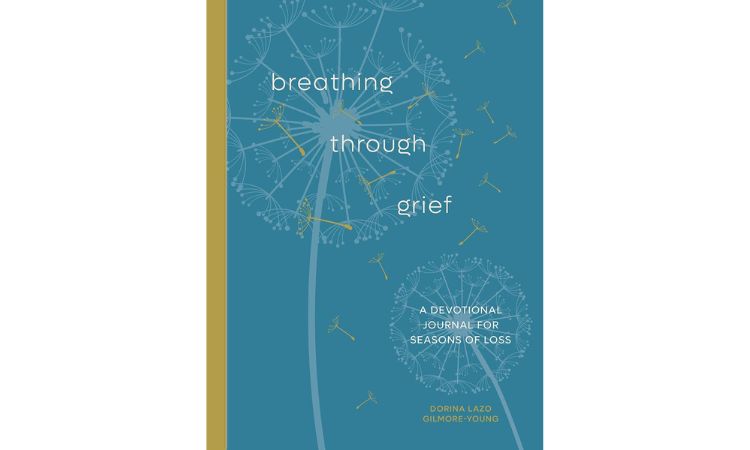
When loss leaves you struggling to find your footing, having a quiet place to reflect can bring a little comfort. This thoughtful devotional journal combines honest reflections, faith-centered encouragement, guided prompts, and practical exercises to help you process difficult emotions without rushing the journey. It gently reminds you that even in the hardest seasons, you can pause, breathe, lean into your faith, and begin finding your way toward hope.
What Is a Grief Devotional Journal?
A grief devotional journal is a quiet place to bring the parts of loss that are difficult to carry alone. Unlike a regular diary, it doesn’t simply ask you to record what happened that day. Instead, it combines guided reflection, prayer, Scripture-based encouragement, and practical exercises to help you slow down and honestly face what you’re feeling.
When grief makes it hard to find the right words, having a thoughtful prompt can give you somewhere to begin. You might write about a memory, name an emotion you’ve been avoiding, express a question you’re afraid to ask, or simply sit with a few quiet thoughts. The purpose isn’t to rush you toward closure. It’s to give you room to grieve at your own pace while staying connected to your faith.
A planner has another purpose entirely. It helps organize appointments, responsibilities, and future plans. A grief journal turns your attention inward, creating space for remembrance, prayer, emotional processing, and spiritual reflection.
The combination of Scripture, journaling, and breathwork can also make the experience more personal. Scripture can offer a steady foundation when life feels uncertain. Writing can help bring scattered thoughts into the open. Slow breathing or breath prayers can create a small pause when sadness, anxiety, or painful memories feel overwhelming. None of these practices can erase grief, but together they can encourage a gentler way of moving through it.
And this kind of resource isn’t only for someone mourning a spouse. It may speak to a parent grieving a child, an adult grieving a parent, or someone mourning the death of a close friend. It can also help people processing other significant losses, including the end of a relationship, a major life transition, or a dream that didn’t unfold as expected.
The Seasons of Grief This Journal Walks You Through
Grief doesn’t follow a neat schedule. You and I might expect the pain to become easier in a predictable order, but real life rarely works that way. One day can feel quiet, while the next brings a memory, question, or trigger that makes the loss feel fresh again.
That’s one reason a guided grief journal can be so meaningful. It gives us permission to meet each season as it comes instead of forcing ourselves to “move on” before we’re ready. Breathing Through Grief approaches loss with space for reflection, prayer, breathing practices, and honest writing, helping readers engage with the changing emotions that can accompany bereavement.
Shock and Numbness
At first, grief can feel strangely unreal.
Even when you know what has happened, your heart may not have caught up with the facts. You might move through familiar routines almost automatically, answering messages, making arrangements, or taking care of responsibilities while feeling disconnected inside.
I think this is one of the hardest parts of early grief because there may not be enough emotional energy to understand what you’re experiencing. You don’t necessarily need to write pages and pages during this stage. Sometimes a few honest sentences are enough.
A journal can give you permission to write something as simple as, “I still can’t believe this happened.”
That’s not failure. That’s honesty.
The breathing exercises and reflective practices associated with this resource can also create small moments of grounding. When everything feels chaotic, stopping for a few slow breaths can give you a brief pause before facing whatever comes next.
Friend, you don’t have to understand your entire grief journey today. You only need enough strength for this moment.
Anger and Bargaining
As the initial numbness begins to shift, other emotions may surface.
Anger can appear unexpectedly. You might feel angry at circumstances, other people, yourself, or even God. You may find yourself asking questions that have no satisfying answers: Why did this happen? What if something had been different? Could I have done something?
I’ve learned that difficult emotions don’t become less real simply because they’re uncomfortable to admit.
This is where writing can become particularly valuable. Instead of pretending that everything is fine, you can put the questions on paper. You can write the things you wouldn’t feel comfortable saying to anyone else. You can acknowledge frustration, guilt, confusion, or disappointment without needing to immediately resolve them.
A faith-centered journal doesn’t require us to hide those emotions from God. Prayer can be an honest conversation rather than a performance.
If you’re angry, say so. If you’re confused, write that down. If you keep replaying what happened, give those thoughts somewhere to go.
The goal isn’t to manufacture peace before you’re ready. It’s to create room for honesty while continuing to seek God.
Sorrow and Stillness
Eventually, grief can settle into a quieter kind of pain.
The busyness surrounding a loss may begin to fade, but the absence remains. This can be the season when ordinary moments become surprisingly difficult. A song, photograph, familiar meal, birthday, holiday, or empty place at the table can bring memories rushing back.
This is where stillness matters.
Instead of filling every quiet moment because silence feels uncomfortable, you might allow yourself to sit with what you’re carrying. Open the journal. Write about the person you miss. Record a memory you don’t want to forget. Write a prayer when you don’t know what else to say.
The journal’s reflection questions and writing space can help turn that quiet into something intentional rather than simply lonely.
And remember, friend, grief isn’t measured by how quickly you stop crying. A difficult day doesn’t mean you’ve gone backward. Sometimes healing includes returning to the same emotions from a different place in your journey.
Give yourself permission to pause.
Give yourself permission to remember.
Give yourself permission to breathe.

Acceptance and Renewed Breath
Acceptance doesn’t mean that the loss suddenly stops hurting.
For me, a healthier way to understand acceptance is learning to acknowledge what has happened while slowly discovering how to live within a changed reality. The person, relationship, dream, or season may still matter deeply. What changes is the way we carry that loss.
This is where the idea of breathing takes on a deeper meaning.
Perhaps there comes a morning when you notice that you laughed without feeling guilty. Or you enjoyed a meal, went for a walk, spent time with someone you love, or made a plan for the future. Those moments don’t betray the person or season you’ve lost.
They can be evidence that life is beginning to expand again.
Breathing Through Grief encourages this kind of gradual movement through its devotional reflections, breath practices, soul-care ideas, and suggestions for honoring loved ones. Remembering can remain part of your life while hope slowly finds its place beside sorrow.
And you don’t have to choose between remembering and living.
You can carry the memories and still make new ones.
You can miss someone and still experience joy.
You can grieve what was lost and remain open to what God may do next.
Friend, renewed breath doesn’t mean forgetting where you’ve been. It means discovering that, even after a season that left you struggling to breathe, you can begin taking the next breath with greater freedom and hope.
What’s Inside the Journal
One thing I appreciate about a guided grief journal is that it doesn’t expect you to arrive with the right words. When you’re hurting, even writing a simple sentence can feel exhausting. Having a short reading, a thoughtful question, or a quiet exercise already prepared can make it easier to begin.
Breathing Through Grief brings several of these practices together. The journal was created from Dorina Lazo Gilmore-Young’s own experience with sudden loss, so the material feels connected to the realities of mourning rather than treating grief as something that can be neatly solved.
Daily Devotional Readings
The journal includes 25 short devotional readings, each addressing a different aspect of the grieving experience.
I like the shorter format because grief can affect concentration. There may be days when sitting down with a long book feels like too much. A brief devotional gives you something manageable to consider without demanding that you process everything at once.
These reflections draw from the author’s personal journey and Christian faith. They invite you to slow down, consider what you’re experiencing, and look toward God in the middle of circumstances you may not understand.
You don’t have to rush through them, either. One reading might stay with you for several days. If a particular reflection brings up a memory or emotion, that’s a good reason to pause rather than immediately turn the page.
Guided Breathing Exercises for Grief and Anxiety
Grief isn’t only something we experience in our thoughts. Strong emotions can affect the way we feel physically, too. A difficult memory can leave you tense, restless, overwhelmed, or simply exhausted.
The journal includes breathing exercises and breath prayers designed to create moments of intentional pause.
For me, there’s something meaningful about connecting a simple breath with prayer. Instead of trying to force myself to feel better, I can stop for a moment and acknowledge where I am. I can breathe slowly, become aware of the present, and turn my attention toward God.
These exercises aren’t presented as a way to erase grief. Rather, they offer a practical rhythm for those moments when you need to stop and regain a little steadiness.
Friend, sometimes you don’t need to figure out the whole situation. You may simply need to take one slow breath and give yourself permission to be present.
Scripture-Based Reflection Prompts
Faith can become complicated during grief. We may have questions about God, wonder why something happened, or struggle to reconcile what we believe with what we’re experiencing.
The journal creates space to engage those questions rather than pushing them aside.
Its devotional approach incorporates biblical reflection alongside personal writing, allowing you to consider how faith speaks into sorrow, uncertainty, remembrance, and hope.
The reflection prompts can help you explore what’s happening beneath the surface. You might think about a memory, an emotion, a difficult question, or something you want to bring to God in prayer.
Because no two people grieve in exactly the same way, your responses don’t need to look like anyone else’s. There isn’t a perfect answer you’re supposed to discover. The value is in slowing down enough to be honest.
Space for Free Writing and Prayer
Perhaps one of the simplest features is also one of the most important: room to write.
When grief is fresh, thoughts can feel tangled. You may have things you want to say but don’t know how to organize them. Writing gives those thoughts somewhere to land.
You can use the pages to record memories, write a prayer, express anger, describe something you miss, or simply put down whatever is on your heart that day.
There doesn’t have to be a polished conclusion.
You might write several pages one day and only a few words the next. You might fill a page with questions. You might write the same person’s name repeatedly because you miss them.
That’s okay.
The journal isn’t asking you to perform your grief. It’s giving you a private place to acknowledge it.
And as you continue, those pages can become a record of more than pain. They can hold memories, prayers, moments of gratitude, small signs of hope, and reminders of how far you’ve come.
Sometimes healing begins very quietly: a blank page, an honest prayer, and enough space to breathe.

The Science and Faith Behind Breathwork in Grief
Grief doesn’t stay neatly inside our thoughts. When sorrow hits, I can feel it in my whole body: a tight chest, tense shoulders, restless sleep, a heavy stomach, or even moments when I realize I’ve been holding my breath. If you’ve experienced deep loss, friend, you may recognize that feeling too.
That’s why intentional breathing can be a useful practice during a difficult season. It doesn’t erase grief or make painful memories disappear. Instead, gentle breathing can give us a moment to slow down, notice what is happening inside us, and respond with greater calm rather than simply reacting to the weight of the moment.
For Christians, there is another layer that makes this practice especially meaningful. Breath isn’t merely a biological function. Scripture connects breath with God’s gift of life. That gives something as ordinary as breathing a beautiful reminder: even in a season when life feels unfamiliar, God remains the giver and sustainer of life.
Why Breath Matters During Trauma and Sorrow
When we’re grieving, the body can respond to emotional distress just as strongly as the mind does. A sudden reminder of someone we’ve lost can make the heart race, muscles tighten, or breathing become shallow. Stress can also leave us feeling physically exhausted even when we’ve done very little.
This is where slow, comfortable breathing may help.
Breathing is closely connected with the body’s autonomic nervous system, which helps regulate functions such as heart rate and stress responses. When we intentionally slow our breathing, especially by allowing the exhale to become longer and more relaxed, we may help our body move toward a calmer state.
I don’t see that as a way to “fix” grief. Grief isn’t a problem that needs to be eliminated. It’s a response to something—or someone—we deeply value.
Instead, I think of breathing as creating a little room.
When sorrow rises, I can pause instead of immediately pushing the feeling away. I can notice my body. I can breathe gently. I can acknowledge, This hurts.
Then I can pray.
That small sequence can be especially helpful when grief feels overwhelming. Rather than demanding that myself or you “move on,” it allows us to stay present with what we’re experiencing.
And sometimes that’s exactly what we need.
Breathwork should also be approached thoughtfully. Gentle breathing exercises are different from intense practices designed to produce dramatic physical or emotional experiences. If you’re dealing with significant trauma, panic, severe anxiety, or another difficult condition, breathing exercises shouldn’t replace appropriate professional care.
For a grieving Christian, the healthiest approach may be wonderfully simple: breathe gently, slow down, pray honestly, and give yourself permission to feel what you’re feeling.

Scripture References to Breath and Spirit
One of the most meaningful biblical references to breath appears near the beginning of Scripture. Genesis describes God’s creation of humanity in remarkably personal language:
“Then the Lord God formed a man from the dust of the ground and breathed into his nostrils the breath of life, and the man became a living being.” — Genesis 2:7 (NIV)
Reflection: When you think about your own breath as a gift from God, how does that change the way you view the difficult season you’re walking through?
I love the tenderness of this image. Humanity is formed from the ground, and God gives life through His breath. Our existence isn’t presented as something insignificant or accidental. Life itself is received.
That thought can become especially powerful during grief.
When someone we love dies, we’re confronted with how fragile life can be. We may wonder how ordinary mornings can continue when everything inside us feels different. We may struggle with the silence left behind.
In those moments, simply breathing can become a quiet reminder of God’s presence.
Not because every breath magically removes sorrow, but because each breath reminds us that we’re still here.
We can take another breath.
We can whisper another prayer.
We can open Scripture again.
We can sit quietly.
We can ask for help.
We can take the next small step.
For me, that’s where science and faith meet without needing to compete. Science can help explain why controlled, gentle breathing may influence physical arousal and stress regulation. Faith gives that practice a deeper framework for the person who believes in God: I am not merely calming my nervous system; I am also choosing to become still, pay attention, and bring my experience before the One who gave me life.
That distinction matters.
Breathing isn’t a replacement for prayer. It can become part of prayer.
It isn’t a substitute for Scripture. It can help us slow down enough to receive Scripture.
It isn’t a cure for grief. It can give us a quiet moment in which we acknowledge our grief rather than running from it.
And sometimes, friend, that quiet moment is enough for today.
You don’t have to figure out the entire road ahead.
Take the breath you have.
Bring the sorrow you have.
Bring the questions you have.
Then place the next moment in God’s hands.